GROWTH · 9 MIN READ
Why Facebook Groups Are the Most Underrated Organic Marketing Strategy Right Now
No ad spend. No algorithm begging. Just rooms full of people already looking for what you sell.
By Crystal Burt, founder of Created In Canva

Most people selling digital products are stuck in the same loop. Post to your page. Get 40 views. Post a Reel. Get 200 views from people in another country who will never buy. Boost a post for $20 and watch it disappear.
Then they assume the problem is their product.
Usually it isn't. The problem is the room. You're talking in an empty one.
Facebook groups are the closest thing to a full room that still exists for free — and almost nobody in the digital product space is using them on purpose.
First — what is a Facebook group, actually?
(If you found this on Pinterest and you've never used one, start here.)
A Facebook group is a private or public space inside Facebook built around one specific interest. Not friends. Not followers. Interest.
The difference that matters: when you post to your own page, Facebook shows it to a small fraction of people who already follow you. When you post inside an active group, your post enters a feed that thousands of people check daily — because they joined to see exactly that kind of content.
You didn't have to build the audience. You borrowed a room someone else spent years filling.
That's the entire strategy in one sentence.
Why this beats almost every "free" strategy people recommend
Three reasons, and they're all math.
- 1. Intent is already sorted. Someone who joined a group called "Created In Canva" has told Facebook and told you what they're interested in. You're not interrupting them. You're showing up where they already are.
- 2. Volume without ad spend. A single post inside a large, active group can reach more people in 24 hours than a small page reaches in a year. Inside our own community, one post has reached 917,000 people. Across our network, members generated over a million reactions in a recent 28-day window. Zero dollars in ads.
- 3. Comments are the algorithm. Groups run on engagement. A post that gets replies keeps resurfacing at the top of the feed. On a page, a post dies in about six hours. In a group, a good post can run for days.
Who this actually works for
This isn't a general "grow your business" strategy. It works unusually well for a specific type of seller:
- Canva template sellers — planners, social media kits, ebook templates, resume templates
- Party and event printables made in Canva — birthday invites, baby shower games, wedding signage, party bundles
- Amazon KDP publishers — low-content books, journals, puzzle books, coloring books
- Canva course and workshop creators — anyone teaching design, template flipping, or Canva monetization
- AI content creators — people selling AI photo prompts, UGC content, faceless video systems
- AI coding and micro-app builders — anyone building small working apps and using Canva for the front-facing brand assets
What all of these have in common: the buyer is a beginner or a hobbyist, not a corporation. Beginners and hobbyists live in Facebook groups. They do not live on LinkedIn. They are not searching Google for your product name. They are scrolling a group at 9pm asking "does anyone know how to..."
That question is your customer, raising their hand for free.
Real results — mine and other people's
I built Created In Canva to 400,000 members organically. Across all five of my communities, that's 800,000+ combined members, built with no paid ads.
But my own numbers aren't the point. The point is what happens for people who show up and promote in the room.
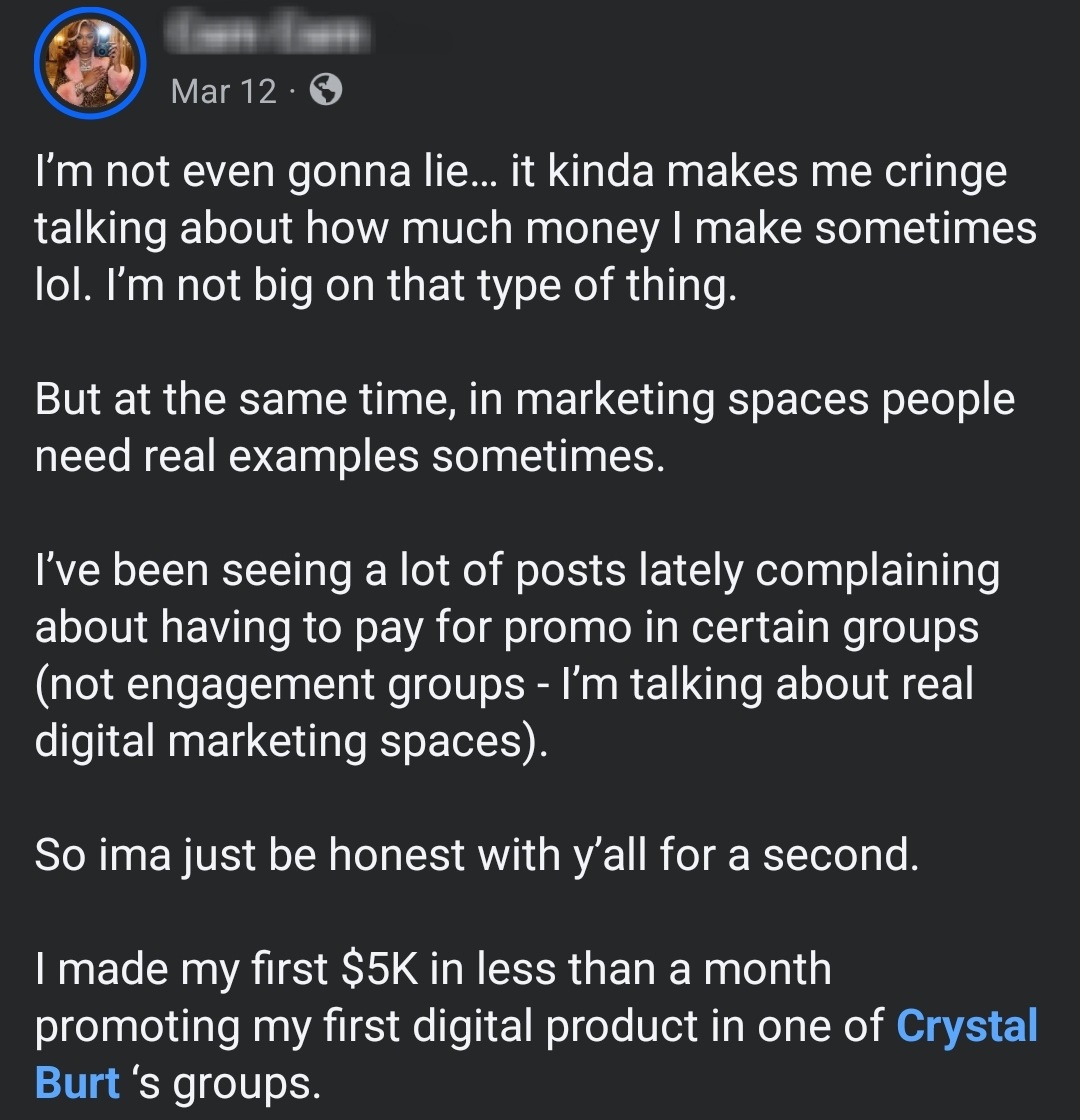
REAL MEMBER RESULT
REAL MEMBER RESULT
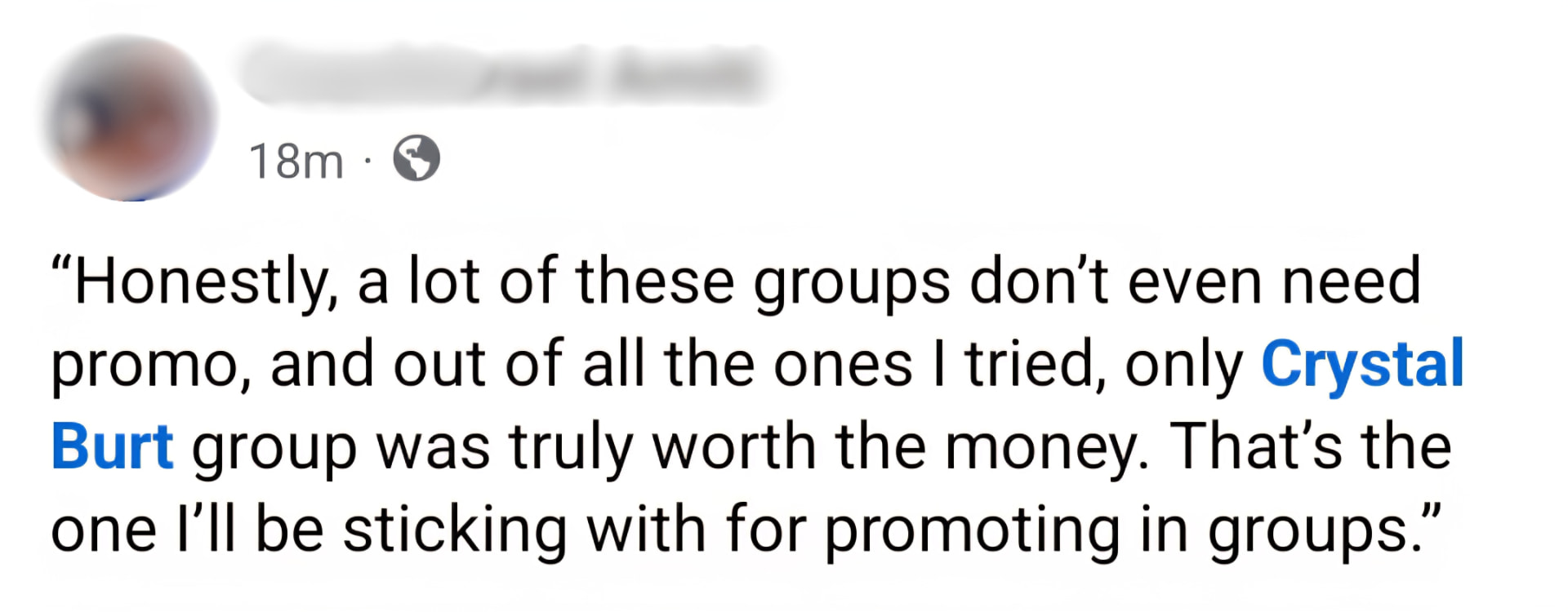
Neither of these people had a big audience. They had one product and access to a room.
How to market in a group without getting ignored (or removed)
Most people do this badly, which is exactly why the opportunity is still open. Six rules:
- 1. Read the rules first. Every group has a promo policy. Some allow daily promo, some allow it one day a week, some require you to be pre-approved. Breaking the rule gets you removed and you lose the room permanently. Ours are posted here
- 2. Give before you sell. Post something useful three times for every one time you sell. Answer questions. Share a tip. Show a before-and-after. People buy from the person they've already seen being helpful.
- 3. Lead with the transformation, not the file. Nobody wants a Canva template. They want a birthday party that looks expensive, or an Etsy shop that finally gets a sale, or a KDP book that doesn't look self-published. Sell that.
- 4. Be specific. "Digital products" sells nothing. "The party invite template I've sold 340 times" sells. Numbers, formats and outcomes beat adjectives every single time.
- 5. Show the thing. Groups are visual feeds. A post with a screenshot of the actual product, the actual sale, or the actual result will outperform a paragraph of text by a wide margin.
- 6. Make one clear ask. One link. One action. Not three offers and a link tree.
The honest part nobody tells you
Facebook groups are not yours. Not mine either.
Facebook is a platform. Meta sets the rules, Meta changes the rules, and Meta can remove a group with no warning and no appeal. Anyone telling you a Facebook group is an "asset you own" is selling you something.
That's not a reason to avoid groups. It's a reason to use them correctly: groups are the top of your funnel, not the whole funnel. Get the reach in the group, then move people somewhere you actually control — an email list, a website, a store.
Borrow the room. Keep the people.
Where to start
The fastest version of this strategy is simple: join an active group in your niche, read the rules, spend a week watching how people post, then start showing up consistently.
If you sell anything made in Canva, Created In Canva is a good place to do exactly that. 400,000+ members, active daily, and promo is allowed under the group rules.
If you'd rather skip the ramp-up and get pre-approved posting access across all five communities — 800,000+ combined members — advertising packages are available in the store.
Frequently asked questions
Q: Are Facebook groups still worth it in 2026?
A: Yes, and arguably more than before. As organic reach on pages and profiles has dropped, groups have become one of the few places on Facebook where a post can still reach tens of thousands of people without ad spend, because group content is served based on member interest rather than follower count.
Q: Can I promote my Etsy shop or digital products in a Facebook group?
A: Only if the group's rules allow it. Some groups ban promo entirely, some have a designated promo day, and some pre-approve sellers. Always read the pinned rules before posting — breaking them usually means permanent removal.
Q: How do I advertise inside the Created In Canva community?
A: Advertising and promo placements are purchased through the store. Once your placement is active you're pre-approved to post, so your content goes live without waiting on admin approval.
Q: How many groups should I post in?
A: Fewer than you think. Two or three highly active, on-niche groups where you post consistently will outperform twenty groups you post in once.
Q: Do I need a big following to sell in Facebook groups?
A: No. That's the main advantage. The group supplies the audience — you supply the offer. Members with zero following have made their first sales inside these communities.
Q: What kinds of products sell best in Canva and AI groups?
A: Templates, printables, party products, KDP interiors, prompt packs, courses and small AI apps — anything a beginner can use immediately without hiring help.